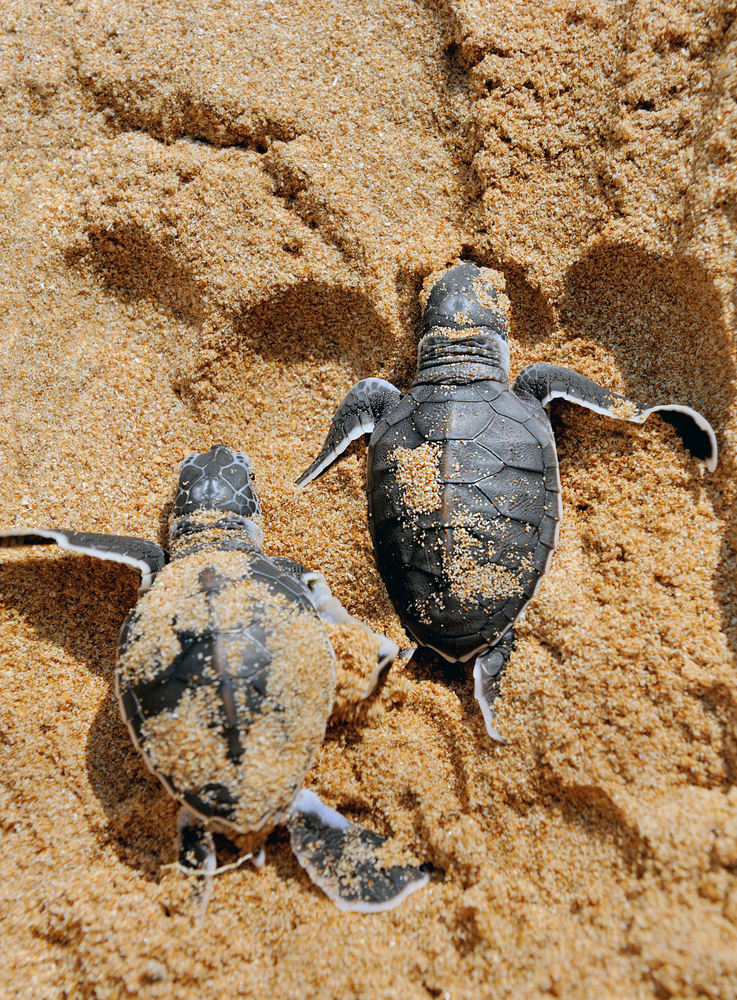
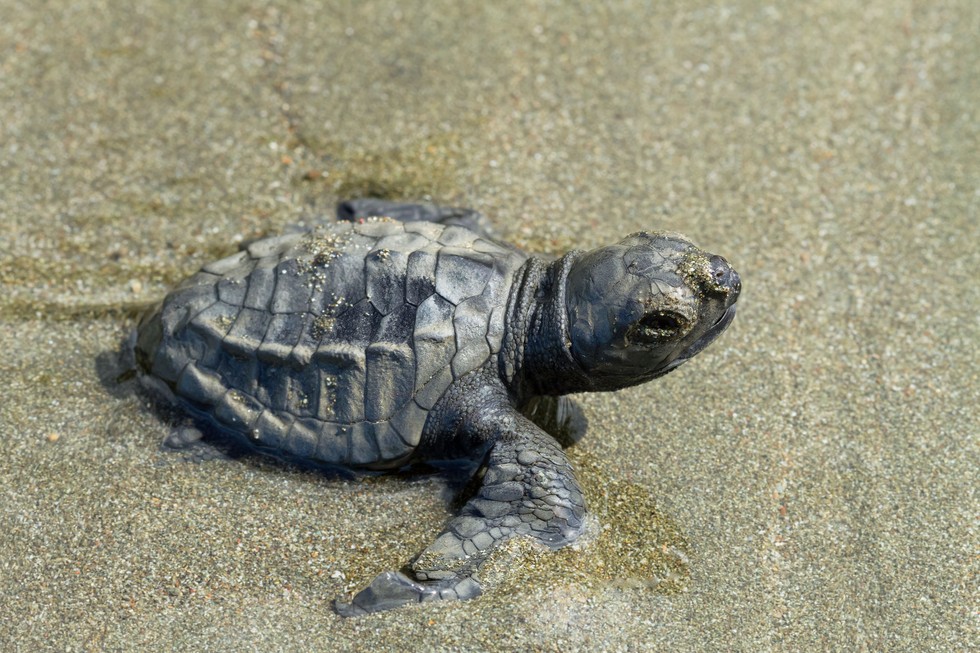
The research, published in the journal Royal Society Open Science, found that
rising sea levels could threaten the viability of turtle eggs and lower the
number of baby turtles successfully hatched.
It analysed one of the largest green turtle populations in the world, on
Raine Island near the outer edge of the Great Barrier Reef.
Researchers involved set out to determine what effect rising sea levels might
have on turtle eggs when they were laid. Taking eggs from Raine Island to a lab,
they inundated select groups of eggs with saltwater for up to six hours at a
time.
They found that eggs that were inundated with saltwater for six hours or more
were up to 30 per cent less likely to hatch.
"Short periods of saltwater inundation, such as those associated with high
tides during severe storms, substantially lower green turtle egg viability," the
study authors wrote.
James Cook University's Dr David Pike, lead researcher of the project, said
the saltwater findings could have implications for sea level rises as a result
of climate change.
"We are trying to anticipate the early effects," he said. "In some places it
only takes a small rise in sea levels, when combined with a storm or a king
tide, to inundate what had previously been secure nesting sites."
He said human intervention may be necessary to protect green turtles in
future.
"People love turtles and it is possible to mobilise large numbers of
volunteers to physically move the nests further inshore. We might be able to
save them with people power. The Queensland Department of Environment and
Heritage Protection has also been out moving sand around the island to provide
turtles with higher elevation nesting sites," he said.
Dr Kathy Townsend from The University of Queensland's Moreton Bay Research
Station said the study was indicative of alarming climate changes worldwide.
"That is one of the issues that isn't just happening here in Australia but is
happening around the world," Dr Townsend said. "If the sand temperatures get too
hot they can basically cook the eggs, the young won't be able to survive that
either."
Dr Townsend said that turtles may start migrating south, where sand
temperatures are cooler.
Dr Pike said according to the current sea level trend, in as little as 50
years Raine Island and other small islands with turtle hatching ground could be
inundated.
"The prediction is that within the next 50 to 100 years, with rising sea
levels, the islands may be lost."