Tuesday, July 24, 2018

An Art Museum Celebration in the Heart of Detroit


When Gretchen Valade and Kevin Steen first met in February 2011, she "thought it was love at first sight," she says, recalling the "great eye contact" they initially shared at a party in Chicago. Alas, she'd failed to notice the TV set behind her—which is what Kevin, a filmmaker, had fixed his gaze upon. By the end of the night, though, he had noticed her, and they were soon dating (for a while it was long distance: he in New York City, she in Detroit). By 2016, the Michigan natives both landed in Detroit. There, in December 2016, he proposed at a friend's gallery by installing pieces of art that commemorated their relationship, with the last piece reading "Will You Marry Me?" The grand gesture inspired the couple's next move: a wedding at the Detroit Institute of Arts. "We loved the idea of getting engaged in a gallery and married in a museum," says Gretchen, a retail merchandiser.

To avoid fighting against the museum's inherent beauty, the couple pulled design inspiration from the venue's artwork to coincide with their desired timeless and elegant vibe for their August 26, 2017 wedding. Their color palette came from the Diego Rivera Mural within the art institute, and they based their invitations off the museum's artist plaques. "We added where it was necessary, but we also left spaces alone, just adding greens and candles," says the bride. "It was important for us that it felt intimate, even in such a large space." The ultimate goal was to give guests what felt like a private tour of the museum, which Gretchen and Kevin effortlessly pulled off as the wedding migrated throughout the locale, starting with the ceremony in the colorful Rivera Court and ending the night with dancing outside the building.

Keep reading to see how this couple pulled off their beautiful art-infused Detroit wedding, captured by Sarah Falugo and planned by Mood Events.

Even the couple's invitation suite was inspired by their venue. "We pulled colors from the Diego Rivera Mural and even the museum's artist plaques inspired our invitation design," says the bride.

When it came to her wedding dress, Gretchen wanted a look that felt understated and elegant. She turned to a high-neck, sleeveless silk sheath gown with a low V-shaped back. "My favorite element of this dress was that I felt comfortable and like I could move and be 'me' on my wedding day," she says of the ensemble, designed by Charlie Brear.

Sunday, February 25, 2018

Pet Subjects: Telegraph vet Pete Wedderburn answers your questions

My Staffie cross is a lovely dog, but whenever we are out, she eats anything and everything she can find. She doesn’t beg at the table but as soon as she is out, anything vaguely edible is swallowed. If I let her off the lead, she makes a beeline for any rubbish bags in sight. Help!

Dogs are natural scavengers, but you should still be able to train her not to do this. She could easily eat something harmful, and even if she doesn’t, this behaviour is a nuisance for you and for others. The answer is to teach her the “leave it” command: visit positively.com/dog-behavior/basic-cues/leave-it to learn how. You should soon be able to stop her in her tracks by saying “leave it” in a firm voice.

My seven-year-old male Balinese cat, Moska, is very timid, going into hiding whenever we have visitors. We have a four-week trip planned to New Zealand. Would it be unfair to leave him at home for that length of time with a pet sitter coming in twice a day? Or should I try to get him into a cattery? He gets very stressed if we try to put him into a cat carrier.

Nervous cats like Moska love their own routine, in their own home. I am sure a good cattery will care for him well, and he’d be very safe and secure, but of course it would involve some stress, not least in travelling there and back. A sensitive, cat-loving pet sitter sounds like the option he’d prefer, if he could ask you. Sitters can be costly, but if you use trustedhousesitters.com, you can find experienced pet sitters with references who’ll mind Moska free of charge, in exchange for the opportunity to stay in your home for their own holiday.

Friday, January 26, 2018

Different Dogs, Different Breeds

Pets play a huge part of our lives. At different times of our lives my husband and I have experienced the joys of having a cat. Recently we have fallen in-love with our daughter and son-in-law’s Siberian Husky. Now, I guess you could say “move over cats, dogs are special too!” Here I have listed the different dog breeds and their characteristics.

The Toy dog is defined as being under 20 pounds. Besides being lap dogs, many are smart, stubborn, and rule the roost. They make excellent pets for apartment dwellers and seniors as they can get plenty of exercise indoors. Sporting dogs are the larger dogs that need lots of exercise but make great companions. These dogs are the ones you take hunting with you. Breeds include Labrador Retrievers, Irish Setters, Brittanys, American Water Spaniels, Cocker Spaniels, English Springer Spaniels, and German Shorthaired Pointers.

These dogs hunt by smell, not sight. The scent hounds, such as the Beagle and the Fox hounds, run with their nose to the ground to follow an animal’s scent. Their size ranges from medium to large. Breeds include Bloodhounds, Beagles, Coonhounds, Dachshunds, Foxhounds, Harriers, Petit Basset Griffons Vendeens, and the Otterhounds.


Sight hounds are dogs who hunt on instinct when they see prey moving; then, by using their speed they overtake their prey. They have a wide size range; from toy to giant. Sight hounds are very fast runners. As for grooming goes the Greyhound is a wash-in-wear dog.

Wednesday, December 27, 2017

Grooming in the dog

The regular grooming of the dog not only serves the body care alone, but also helps the owner in the early detection of diseases. In addition, the combing is perceived by the dog as a care, which positively influences the trust and the bond to humans.
 「Samojede」的圖片搜尋結果
Not every dog ​​needs to be brushed, depending on coat length and texture. The coat care in dogs should also be adapted to the seasons, because especially in spring and autumn, thorough brushing is particularly important to remove dead hair by changing the coat. Otherwise, they can hinder the free air circulation of the underlying skin.

Neglecting fur care in the dog can quickly matt the hair, which not only leads to an unkempt appearance, but also a risk factor for ectoparasites and other skin problems , such as bacterial dermatitis.

The brushing is particularly important in the context of grooming the dog. Longhaired dogs should first be combed out with a comb or harrow loose hair from the top coat and especially the undercoat. Then the entire coat is brushed with a hard brush in long strokes - it should always be worked with the stroke. The powerful brushing not only removes loose hair, it also stimulates blood circulation in the skin. On the one hand, this promotes better hair follicle supply and, on the other hand, secretion of sebum, so that the skin is better protected against adverse conditions. Which brush is best suited for this depends on the condition of the dog fur. Offered are both plastic materials,

The thorough grooming of the dog must be carried out at least once a week, depending on the type of coat. For long-haired dogs such as the Tibetan Terrier or Longhair Collie , however, it should be done on a daily basis. The equipment for grooming the dog is quite manageable in races with smooth fur and little undercoat. Here, a brush is usually sufficient to remove the loose hair. For the care of rough and wire-haired breeds such as Airedale Terrierand Schnauzer, however, a trimmer is needed, which removes the strong undercoat and the dead cover hair. Long-haired representatives require the most intensive care and should be treated daily with a comb and a brush. Some breeds also need a regular shearing. However, this should be left to a specialist, since the risk of skin injuries is relatively high here.

Wednesday, November 29, 2017

His dog wakes him up in the middle of the night, when he understands why he is calling for help

A few days ago, Jacques Salaun - a baker in Roche-Maurice - was woken in the middle of the night by his dog Loustic, a German Shepherd usually very wise. It is then 2:30 in the morning. The dog jumps on his master's bed to wake him up. Immediately, Jacques Salaun understands that something is wrong because this behavior is not usual for his dog.

A rescue of accuracy
It is there that he notices smoke in his room and feels a slight burning smell . In fact, a fire had started in the bakery under the bedroom. It was therefore necessary not to lose a second. Jacques Salaun immediately contacts the firemen and catches a fire extinguisher in an attempt to extinguish the fire, in vain because it is already too important.

Once outside, the firefighters quickly took over the fire and got through it. Unfortunately, the trade was still well damaged and work will be needed. Jacques Salaun and his dog are totally unscathed , thanks to the quick intervention of Loustic without whom all this could have ended much worse.


And the firefighters confirm that if they had been warned 15 minutes later, everything would have burned. So we can say that Loustic is the hero of the day!

Tuesday, October 24, 2017

Corals eat plastic because they like the taste

For years, scientists thought corals accidentally ate the plastic debris that washed into their waters because they mistakenly took them for prey. But a new study from Duke University shows this is not the case: the plastic just tastes good.

Just like humans, corals are drawn to food that is bad for them, it would seem. The researchers tested corals they had collected off the North Carolina coast, by giving them a variety of options to eat, including bits of sand and plastic.

The plastic can’t be mistaken for prey because coral don’t have eyes, so they have no way of seeing what they are about to eat. The researchers think some of the chemicals found on the plastic might be making it taste nice to the coral.

While corals might like the taste of plastic, it does not mean it is good for them to consume it. Plastic is almost completely indigestible, so it causes blockages, create a false sense of being full, or reduce the energy reserves in animals that eat it. “About 8% of the plastic that coral polyps in our study ingested was still stuck in their guts after 24 hours,” says Allen.


“Ultimately, the hope is that if we can manufacture plastic so it unintentionally tastes good to these animals, we might also be able to manufacture it so it intentionally tastes bad,” Seymour says. “That could significantly help reduce the threat these microplastics pose.”

Wednesday, September 27, 2017

Don't Pet the Puppies in Chernobyl

In 1986, the residents of Chernobyl were forced to flee their homes when the town’s nuclear power plant turned into a disaster zone. The area of Ukraine has been without a permanent human population ever since, but that doesn’t mean it’s empty. The landscape is teeming with insects, plant life, and even radioactive puppies descended from the house pets that were abandoned there 31 years ago.

A new mini documentary from Cloth Map explores the lives of some of Chernobyl’s cutest occupants. In the “Puppies of Chernobyl,” the tiny animals can be seen playing, wagging their tails, and running around just like domesticated dogs. Though the stray dogs tend to gather around places with the most tourist activity, like Chernobyl’s canteen, contact between humans and puppies is discouraged. As host Drew Scanlon explains in the video below, “Visitors are advised not to touch animals in the exclusion zone because they could carry radioactive particles in their fur.”

According to Newsweek, the radioactivity goes even deeper than that. When the American nonprofit Clean Futures Fund surveyed dogs in the exclusion zone, they found pockets of radioisotopes in their bones. The organization has set up a spay and neuter clinic nearby to keep the line of Chernobyl dogs from proliferating.

Sunday, August 27, 2017

Adopt a Pet from ARL

At the Animal Rescue League of Boston (ARL), our goal is for animals to be safe and healthy where they belong, in homes and out of shelters.

No matter how they came to the shelter – through a law enforcement case such as a hoarding situation, as a stray brought in by a kind citizen or an animal control officer, or when an owner passes away – cats, dogs, birds, rabbits, and even pot-bellied pigs are treated with kindness and compassion.

Every animal that comes through our doors is immediately provided with extraordinary medical care by our Shelter Veterinary Medicine team.

While most shelters put an emphasis on physical care, we at the ARL know that an animal’s mental and emotional well-being is equally as important. Each animal participates in our unique Shelter Behavior and Enrichment program to not only make them happy and comfortable while they’re in our shelter, but also prepare them for life in their future home.

When you adopt a pet from one of our shelters in Boston, Brewster, or Dedham, you not only give a homeless animal a safe and loving place to live, but also save two lives: the animal you adopt and the animal who can take its place.

Tuesday, July 25, 2017

Protecting the Leatherbacks

Did you know that a male leatherback sea turtle, once it first heads to sea, never returns to land, while the female returns to her place of birth every year to lay hundreds of eggs each nesting season?!
We are fortunate in our small twin-island state that these incredible giants, after swimming thousands of miles, still visit our shores. Unfortunately, however, they face numerous threats upon arrival here: illegal poaching, entanglement in fishing nets and mistreatment by humans. When one thinks of it, it is a scary place for an animal that is simply looking for a safe nesting ground.

I admire the work of many local groups and individuals—including Michael James— who dedicate their lives to protecting our beautiful sea turtles. “Yankee”, as James is known by the Manzanilla community where he was born and raised, lived his entire life near the sea. His love for animals has inspired him to protect the leatherback sea turtles which he has been quite fond of since he was a little boy. Growing up on the beach, not only did he look out for the popular leatherbacks, but other sea turtle species including the green and hawksbill turtles.

I commend this most humble villager for devoting over 30 years of his life to carrying out both daytime and night-time patrols daily, together with other villagers, to ensure the nesting turtles and their hatchlings are safe.

Wednesday, June 28, 2017

PETA Pushes the EPA to Reduce Animal Tests—and Animals Win!

Last year, with strong bipartisan support, Congress amended federal government legislation regulating toxic chemicals for the first time in 40 years by passing the Frank R. Lautenberg Chemical Safety for the 21st Century Act. As a result of the involvement of animal-protection organizations, including PETA, the legislation directs the Environmental Protection Agency (EPA) to reduce and replace the use of animals in chemical testing.

Yet the battle to save animals continues. Earlier this year, the EPA attempted to circumvent the requirements of the Lautenberg Act by broadly interpreting a requirement to determine whether new chemicals present unreasonable risks to health or the environment to mean that there must not be a risk under even the most unlikely of circumstances. This would obviously be impossible to determine, even if an endless number of animals died in chemical tests.
Further, the agency proposed a frightening “pre-prioritization” scheme that would have allowed the agency to require extensive animal testing for any or all of the 85,000 chemicals already in commerce, without opportunity for stakeholder input.
PETA repeatedly pressed the EPA to return to the agency’s previous policy of considering only the intended uses of chemicals and to remove or amend the pre-prioritization plan so that all existing information can be taken into account before requiring additional testing. Our scientists testified in public meetings, submitted extensive technical comments, and wrote to both the EPA Administrator and to the Office of Management and Budget.
Thankfully, the EPA listened to our concerns and to those of other stakeholders and deleted the controversial pre-prioritization phase. And it returned to its previous policy of focusing on the intended uses of chemicals and requiring companies to notify it before using chemicals in new ways.
It also reaffirmed its responsibility to reduce and replace animal testing and to use a stepwise approach to information gathering that emphasizes using already available data on hazard and exposure risks.
These developments will prevent an untold number of animals from suffering in deadly chemical tests. They comply with our legislators’ intent in passing the Lautenberg Chemical Safety Act and will better protect public health by applying more thoughtful testing strategies. For our part, we will continue to work with government agencies and legislators to drive real change for animals.

Saturday, August 13, 2016

Relocating Australian tortoise sets controversial precedent

As long as it has been known to science, the diminutive western swamp tortoise has been in peril. By the time it was formally named in 1901—using a decades-old museum specimen—Pseudemydura umbrina was presumed extinct. And since it was rediscovered in the 1950s, biologists have struggled to protect it from the twin threats of habitat loss and introduced predators, which drove its numbers to bottom out at just 30 individuals in the 1980s. Now that climate change poses an even more urgent threat to the endangered tortoise, biologists have a controversial plan to safeguard its future—by moving it to new sites outside of its known historical range. The translocation, which took place today, makes the tortoise the first vertebrate to be deliberately relocated because of climate change.


The yearlong trial, several years in the planning, will track 12 captively bred juvenile tortoises released to each of two sites roughly 250 kilometers south of their native habitat on the outskirts of Perth, Australia. Although the sites aren’t ideal for the tortoises now, detailed modeling of rainfall, temperature, swamp hydrology, and tortoise biology predict they will be in half a century.

For the western swamp tortoise, whose numbers in the wild are now estimated at just 50 breeding adults, declining rainfall is the primary concern. The 15-centimeter-long tortoises feed when rains fill swampy habitats in winter, and then enter a state of dormancy known as estivation when the swamps dry out to clay pans in the late spring or early summer. The less rain in winter, the more likely the hatchlings and juveniles will starve before the next winter rains arrive. Swamps that were wet for 5 to 7 months of the year in the 1960s are now often dry for most of the year, and rainfall is set to decline further in the future. Hemmed in by urban sprawl and agricultural land, the tortoises can’t up and move, either. “It’s a double whammy,” says conservation physiologist Nicola Mitchell from the University of Western Australia in Perth, who is leading the trial.

Thursday, February 18, 2016

SCIENTISTS PROVE EXISTENCE OF A THIRD SPECIES OF TORTOISE IN MEXICO

A new study titled “The desert tortoise trichotomy: Mexico hosts a third, new sister-species of tortoise in the Gopherus morafkai-G. agassizii group” has established the existence of an otherwise unknown tortoise species in Mexico, with the name Gopherus evgoodei given to it in honor of a conservationist, naturalist, and founder of the Turtle Conservancy.

Gopherus evgoodei

For many decades, scientists had been doubtful of the variability existing among desert tortoises in Mexico, but the new study carried out by researchers from the University of Arizona has established that a third species of desert tortoise actually exists in the country, with the finding published in the journal ZooKeys.

Dr. Taylor Edwards, leader of the international team of researchers analyzed several tortoises between Sonora and northern Sinaloa over a 6-year period, eventually establishing that those from the south posses much shorter tails with flatter back shells.

Unlike its sister species, whose shells are medium to dark brown with greenish hues, while the bodies are dark gray to brownish-gray, the new tortoise is dark tan to medium-brownish with an orange cast. Again, the new tortoise species is found to live only in thornscrub and tropical broadleaf forests over 24,000 km geographic range.

Little is actually known about the behavioral inclinations of this new species but scientists continue to study it to know. The name Gopherus evgoodei was given to honor Eric V. Goode who found the Turtle Conservancy for his efforts and untiring labor to conserve the creatures.

Thursday, January 21, 2016

Cold-stunned turtles recuperate at Greensboro Science Center

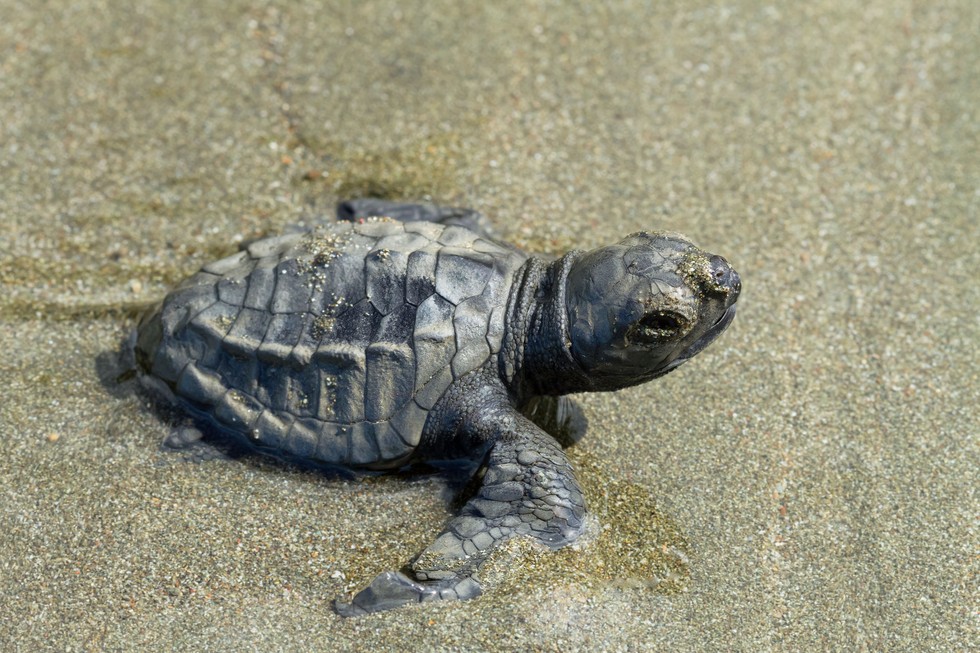
In a back room at the Greensboro Science Center, twin blue tubs serve as temporary housing for four special guests — endangered green sea turtles recuperating from a sudden temperature drop off the North Carolina coast that left hundreds of the reptiles in water too cold for them to swim.
Four Green sea turtles find refuge at Greensboro Science Center after cold snap

The turtles were “cold stunned,” a condition similar to hypothermia that occurs when the water temperature changes before cold-blooded reptiles, including turtles, can migrate to warmer areas.

According to estimates, more than 600 turtles were cold stunned off the coast this month, including the four recuperating at the science center.

The turtles arrived in Greensboro last week and will stay at the center until they’re strong enough to be released into the wild, part of a statewide rehabilitation effort led by the North Carolina Aquarium.

Eight other green sea turtles are recuperating at Ripley’s Auditorium at Myrtle Beach, S.C., after they washed up on beaches along the Pamlico Sound.
Other sea turtles stunned by cold weather in New England are being treated at the South Carolina Aquarium in Charleston.

Hundreds of turtles have already been rehabilitated elsewhere and released. Determining a timeline for that process depends on the individual turtle’s case but also on the weather.

Despite there being prohibition on fishing within a distance of 20km from the beach, experts claim that trawler operators still undertake fishing illegally there.

Tuesday, December 29, 2015

Migrating turtles given help navigating Canberra nature reserve

Volunteers have been doing turtle patrols at the Mulligans Flat Woodland Sanctuary at Forde over the summer, including Christmas Day.
The eastern long-necked turtle is common in the Canberra area.
On a daily basis, they have found several creatures stopped at the sanctuary's predator-proof fence on their way in search of food, water or a mate.
"It just seems to be their natural instinct to migrate at certain times," general manager of the Woodlands and Wetlands Trust Jason Cummings said.
"But the turtles can get stuck at the fence and for whatever reason they don't turn around and go back to where they came from.
"So they will stick there and try to poke their way through but they can't get through."
The Woodlands and Wetlands Trust has also secured $1.2 million in Commonwealth, ACT Government and community funding to help it triple the size of the sanctuary.
The planned expansion would take it from 400 hectares to 1,200 hectares over the next 12 to 18 months.
"It means we can have more bettongs for example and more bush stone curlews," Mr Cummings said.
"But also we can bring other species back, species that are larger and require larger home ranges in a bigger sanctuary."
Mr Cummings said this would make Mulligans Flat the leading sanctuary for the box-gum grassy wetland ecosystem.

He said the group was still looking for donations and would need more volunteers as the fence expanded.

Friday, July 24, 2015

Veteran Takes Bullet To Protect Baby Sea Turtles

A Florida retiree went the extra mile to protect sea turtles — and got shot for it.

Stanley Pannaman, 72, spends his nights volunteering with a wildlife group that watches over sea turtle nests near Lauderdale-by-the-Sea, Florida. The volunteers make sure no one bothers the nesting mothers or the babies, and help the little ones get to the ocean once they hatch.

On Friday night, the night watch took an odd turn when an allegedly intoxicated man confronted the turtle watchers. "He was saying things like, 'I hate sea turtles, I hate sea turtle people, you eff eff eff people are destroying my life, I hate you,'" Pannaman told the Sun Sentinel.
The man, who has been identified as Michael Q. McAuliffe, 38, then ran to a nearby nest, screaming, and began to tear down the sticks surrounding it and to kick at the area. He threw a punch at one volunteer when they warned him he was breaking the law, the New York Daily News reported, then set his sights on Pannaman.

Pannaman, a Vietnam vet who uses a cane to walk, pulled out his gun to warn McAuliffe away, then placed it back in his pocket. But McAuliffe didn't stop. Hereportedly tackled the former Marine, pushing him into the sand and punching him in the head.

He then grabbed Pannaman's gun, which McAuliffe called a "flare gun," and tried to shoot Pannaman in the chest. The veteran pulled away just in time so the bullet hit his waist, sparing his life.


Fortunately, Pannaman survived and is recovering at home, while McAuliffe waits in jail facing multiple charges. But Pannaman says he doesn't regret anything, and will be back out protecting the turtles as soon as he can.
"Never in my wildest dreams did I think monitoring sea turtle nests was going to be a life-threatening experience," he told the Sun Sentinel.


Florida is a major nesting ground for five species of sea turtles; of those five species, one is threatened, two are endangered and two are critically endangered. Volunteers like Pannaman can make all the difference, as saving the life of even one sea turtle can be crucial to the species' survival.

Raine Island's baby turtles at risk from rising sea levels

Green sea turtles might not hatch at all if sea levels continue to rise.

The research, published in the journal Royal Society Open Science, found that rising sea levels could threaten the viability of turtle eggs and lower the number of baby turtles successfully hatched.

It analysed one of the largest green turtle populations in the world, on Raine Island near the outer edge of the Great Barrier Reef.
Researchers involved set out to determine what effect rising sea levels might have on turtle eggs when they were laid. Taking eggs from Raine Island to a lab, they inundated select groups of eggs with saltwater for up to six hours at a time.

They found that eggs that were inundated with saltwater for six hours or more were up to 30 per cent less likely to hatch.
"Short periods of saltwater inundation, such as those associated with high tides during severe storms, substantially lower green turtle egg viability," the study authors wrote.

James Cook University's Dr David Pike, lead researcher of the project, said the saltwater findings could have implications for sea level rises as a result of climate change.

"We are trying to anticipate the early effects," he said. "In some places it only takes a small rise in sea levels, when combined with a storm or a king tide, to inundate what had previously been secure nesting sites."

He said human intervention may be necessary to protect green turtles in future.
"People love turtles and it is possible to mobilise large numbers of volunteers to physically move the nests further inshore. We might be able to save them with people power. The Queensland Department of Environment and Heritage Protection has also been out moving sand around the island to provide turtles with higher elevation nesting sites," he said.

Dr Kathy Townsend from The University of Queensland's Moreton Bay Research Station said the study was indicative of alarming climate changes worldwide.
"That is one of the issues that isn't just happening here in Australia but is happening around the world," Dr Townsend said. "If the sand temperatures get too hot they can basically cook the eggs, the young won't be able to survive that either."

Dr Townsend said that turtles may start migrating south, where sand temperatures are cooler.

Dr Pike said according to the current sea level trend, in as little as 50 years Raine Island and other small islands with turtle hatching ground could be inundated.


"The prediction is that within the next 50 to 100 years, with rising sea levels, the islands may be lost."

Tuesday, April 7, 2015

Canadian man caught trying to smuggle 51 live turtles under his clothes

north american spotted turtle
A Canadian man taped 51 live turtles to his legs and groin and tried to hide them under sweatpants in an attempt to smuggle the reptiles over the Detroit border crossing, according to federal prosecutors in Michigan.
The man was captured as part of a surveillance operation conducted by US Fish and Wildlife Service agents. An official with the service said there has been an increase in turtle smuggling in the last year, which they attribute to demand in Asian food and collector markets.
“These turtles, by the time they get to the end-collector, they can be worth anywhere from $1,300 to $1,500 a turtle,” said Ed Grace, deputy chief law enforcement officer with the US Fish and Wildlife Service.
Prosecutors say Kai Xu and Lihua Lin attempted to smuggle several species of North American pond turtles out of the US and into Canada.
On 5 August, two fish and wildlife agents say they watched Xu disappear behind two semi-trailers in a Detroit parking lot for about 10 minutes before reappearing with, “irregularly shaped bulges under Xu’s sweatpants on both legs”.
Xu was later stopped by Canadian border patrol after he drove through the Detroit to Windsor, Ontario crossing. Xu’s attorney, Timothy Debolski of Garden City, Michigan, said it’s too early to comment on Xu’s case. Agents said they were tipped off by a Detroit UPS employee identified only as “Dave”, who alerted agents to a seven pound box labeled “live fish keep cool”.
In an indictment of Lin, agents said they surveilled Xu as he drove Lin to the Detroit Metropolitan Airport on Tuesday. Lin was bound for Shanghai. He checked two bags, in which fish and wildlife agents say they found more than 200 live turtles, including the protected spotted turtle.
Fish and wildlife service agents say turtles are far from the only North American animals targeted by poachers.
A spokesman for the fish and wildlife office, Gavin Shire, said agents sometimes find hummingbirds smuggled in wigs, and that rattlesnakes and Gila Monsters are also popular prey for smugglers.
“Not just with turtles, I see it with ginseng, I see it with how wildlife in the United States can be, you know, coveted by collectors or for food markets,” said Grace.
Both men were indicted on illegal smuggling charges and violations of the endangered species act. The turtles were seized by fish and wildlife agents.

Monday, March 9, 2015

Pig-nosed turtle is too cute for its own good, says new report

The global illegal animal trade is taking its toll on vulnerable species, among them a small and distinctive reptile you might have seen featured in news stories for being smuggled aboard airplanes in people’s trousers. According to a newly released report by Traffic, an international watchdog group that monitors the wildlife trade, the rare pig-nosed turtle is under dire threat from exotic pet enthusiasts.
According to Serene Chng, programme officer at Traffic’s Kuala Lumpur office, the reptile is in high demand from pet traders - including online traders - in Europe, the United States and Asia. It can be found only regionally in Australia and Papua and is categorized as “vulnerable” on the IUCN Red List of Threatened Species.
The pig-nosed turtle - named for its porcine snout – is especially appealing to pet traders because of its “uniqueness”, explains Chng: “They are the only surviving species of the family they are in. They come from a restricted range, so it is very exotic to own [them]. And the hatchlings are very attractive and very cute.” The species can grow up to 50 lbs and two feet in length over the course of its 40-year lifespan.
Pig-nosed turtle
The new report on the state of the species finds that within a 10-year period (2003-2013), 80,000 pig-nosed turtles were confiscated in some 30 seizures, including a massive bust of 8,368 turtles in an array of suitcases in Papua and Jakarta, Indonesia, last January. “Chances are there is a lot more illegal trade happening that isn’t being reported or caught,” Chng says.
The illegal animal trade constitutes an estimated $10bn global industry, according to the Humane Society. Numbers on the illicit exotic pet trade are hard to come by, but Peter Paul van Dijk, director of Conservation International’s turtle conservation program, speculates that it’s roughly $1bn annually - and growing. And although turtles have been a mainstay of illegal trade for at least 20 years, the turtle trade is “quietly growing in the US,” according to van Dijk. “There is greater demand and an increased opportunity to buy turtles in pet stores”, he says.
China has one of the biggest thirsts on the globe for pet turtles, says Ross Kiester, Chief Scientist at the Turtle Conservancy. “The pet trade is definitely increasing and you see that as the Asian countries become more wealthy. 20 years ago in China, no one could afford turtles as a pet - and now everyone can.”
According to Chng, millions of turtles and tortoises are being shuttled around the globe annually for the pet trade. She says there’s an accelerating trend of exporting turtles by packing them into checked luggage on international passenger airlines. Smuggled animals are usually babies because of their smaller, more transportable size. Nearly 20% of turtles die while being smuggled.
According to the report, Papuan villagers are plucking upwards of 2m pig-nosed turtle eggs from their riverside nests annually. Because hatchlings tend to bring more money than the turtle eggs, some Papuan collectors and “immigrant traders” incubate [the turtles] in hatcheries. Hatchlings can sell on the international market for $39-$56 each.
This wasn’t always the case. Papuans once hunted the eggs solely for food, in numbers that were more sustainable. But the high market prices have made the turtle much more valuable as a commodity than a food source. Furthermore, turtle traders are enticing Papuan communities with expensive turtle-hunting gear, like motorboats.
The pig-nosed are one of a number of turtles that are in danger because of their exotic attributes. Other sought-after species include the Indian star tortoise, the black spotted turtle, the radiated tortoise and the ploughshare tortoise.
The vast, illegal trade in wildlife operates for a number of reasons. It begins with a basic lack of oversight and regulation, “meaning no one is watching it or there is corruption going on or papers are being forged”, Chng explains. Some animals, such as the pig-nosed turtle, aren’t supposed to be traded if they are collected from the wild. But often, a trader will say that an animal is “captive bred”, meaning its parents were born in captivity as well. The problem is that the traders sometimes lie.
So what’s a conscientious consumer to do? “Ask for permits,” Chng says. “If it’s legally traded, the pet shop should have permits for the import of the species.”
Still, even if proper documentation is provided, it doesn’t mean there aren’t consequences. “For every turtle that they buy at the pet shop,” Chng says, “there are many dead turtles along the way.”
To avoid the extinction of the species, Chris Shepherd, regional director of Traffic in Southeast Asia, is calling for “urgent enforcement action in Papua”. Governments must increase the number of inspectors along the international points of trade chain in Singapore, Malaysia, Thailand, mainland China and Hong Kong, he says. Shepherd also advocates for international public awareness campaigns and “efforts to address socio-economic issues that drive the illegal trade in this distinctive but imperiled species”.
Christina Russo is a freelance reporter and public radio producer covering animals and wildlife.

Wednesday, January 9, 2013

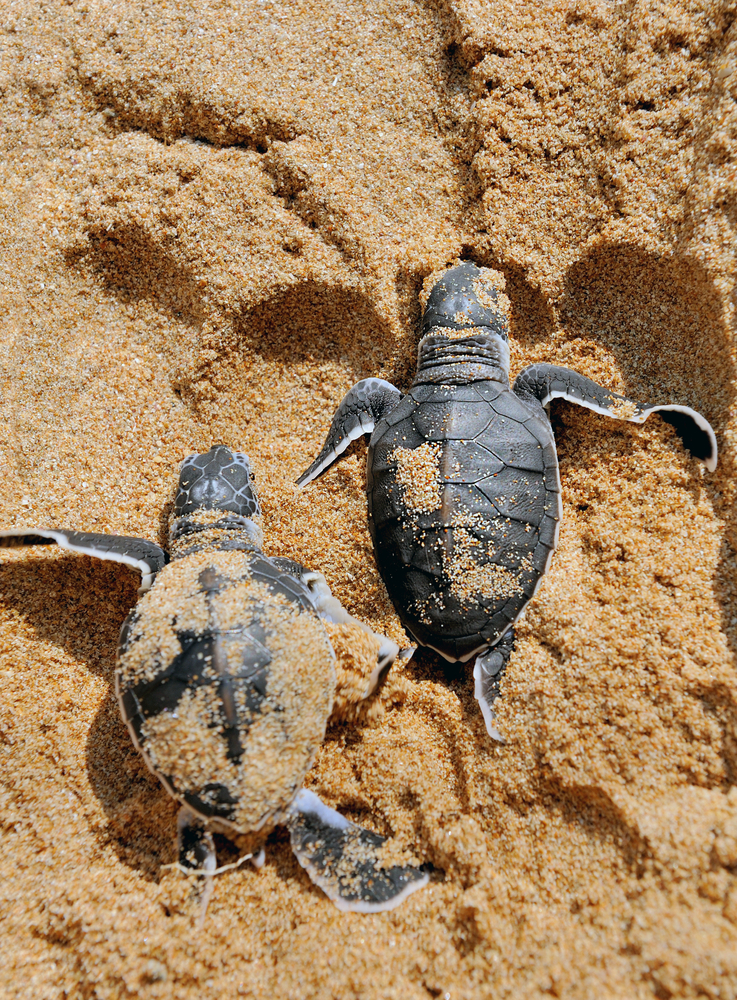
You Need To Know About These Facts About Green Sea Turtle

One of the larger species of sea turtles is the Green Sea Turtle. It can be up to 400 pounds and as long as 5 ½ feet. They are a common tourist attraction that people love to observe when they come to Hawaii during certain times of the year. This is a big part of the economic development there as well as educating people about the value of these sea turtles.

Many people are surprised that this sea turtle has such a name because it isn't green. It is more of a dark brown or olive color. The name for it comes from the fact that it has fat that is green in color. However, the top of the shell can be various shades of orange and red too. The coloring will actually change at different points in their life. The body of this sea turtle is large and the carapace is tear drop shaped. They have very large flippers that look like paddles.

The snout of this sea turtle is very short and it doesn't have a hooked beak. The lower jaw has a serrated element to it. On the surface of the head there is a pair of pre-frontal scales. The carapace offers five central scutes and then four pairs of lateral scutes. The underside of it also has four pairs of scutes.


The sub tropic and tropical regions are home to the Green Sea Turtle. The largest population of them is believed to be around Hawaii. They are also known to live in Asia, Australia, and the waters around Mexico.

They are known to migrate long distances – even thousands of miles – to find food, for mating, and to reach their nesting ground destination. They tend to stay closer to the shore than other sea turtles so they are more observed at the surface of the water and out of the water. They are known to go to the shore during the day and just soak up the sun. There isn't a great deal of other information well known about their behaviors.

The young Green Sea Turtles feed on meat, and will do so for about the first years of life. Then they will start to eat various forms of plant life include sea grass and algae. By the time they are fully mature, they are going to switch to a diet that is only plant related. They will start to eat much more though as they switch to plants because they aren't as filling as meat. They do need to get air about every 5 minutes, but still they are known to be deep divers to get food.

For the Green Seat Turtle, mating won't occur until they are 15 or more years of age. Usually, that time frame is more dependent on their size than on age. The larger they get, the more likely they are to start mating. Males will return to the location where they were born to find a mate annually.

This could prove to be a short distance or a very significant distance. Females may end up at the location where they were born but they tend to have several breeding locations that they can pick from. Some females go to the same location year after year but that isn't always the case. The females don't mate annually, only ever 2 to 4 years. Once the females are ready to lay their eggs, they go to the shore and they will dig a nest to place them in. She may offer from 100 to 200 eggs and then cover them up to protect them from predators and the elements.

Saturday, December 29, 2012

The Basic Knowledge About Aldabra Giant Tortoise

The Aldabra giant tortoise is a species of giant tortoise found in the islands of Aldabra Atoll in the Seychelles. It is one of the largest tortoises and is rated as vulnerable by IUCN.


Physical Features

The Aldabra giant tortoise is the largest tortoise, sometimes exceeding a weight of 355 kilograms. Males are bigger than females. An average male weighs about 280 kilograms and has a carapace length of 47 inches (120 cm). Females weigh about 150 kilograms and measure 35 inches (88 cm). These tortoises resemble the Galapagos giant tortoise. They have a carapace which is brown or tan in color. Their carapace is shaped like a dome. Aldabra giant tortoises have very long necks which help the to feed on branches more than a meter high.

Life Span

The Aldabra giant tortoise has the longest life span of any animal. There was one specimen which died in the Kolkata in 2006. It was named Adwaita and was born in 1756. It lived for about 250 years before it died.

Distribution

The Aldabra giant tortoise is found in the island of Aldabra Atoll in the Seychelles. The atoll has the largest population of these animals, with an estimated 152,000 individuals. They are also found in Mauritius, Zanzibar and Rodrigues. they are found in grasslands, scrubs and mangroves.

Diet

The Aldabra giant tortoise is mainly a herbivore, eating stems of woody plants, leaves and grasses. they sometimes eat small invertebrates and will even eat bodies of dead tortoises. In captivity, they are known to eat fruits such as apples and bananas.